Industry

Mobility

Client

Client

Share Now

Design at the Wheel of a High-Stakes Car Sharing Merger

Design at the Wheel of a High-Stakes Car Sharing Merger

  • End-to-End Service Design

  • Change Management Support

  • Merger & Integration Strategy

  • High-Fidelity UX Prototyping

  • Risk Management

  • End-to-End Service Design

  • Change Management Support

  • Merger & Integration Strategy

  • High-Fidelity UX Prototyping

  • Risk Management

  • End-to-End Service Design

  • Change Management Support

  • Merger & Integration Strategy

  • High-Fidelity UX Prototyping

  • Risk Management

At a glance

This project focused on piloting the integration of a third-party rental service within the Share Now app. We unified two different service models into one journey and tested user trust, usability, and business potential before further investment.

My Role

Product designer

Researcher

Service designer

Team

Product manager

Business analyst

Software engineers

Front-end engineer

Quality analyst

Year

2021

Tools

Mural

Figma

Jira

Confluence

My role
I led the design collaborating closely with engineers, product managers, and fellow designers. I facilitated design-thinking workshops, mapped services and defined key problems and opportunities I created and prototyped mobile-first solutions, and co-developed high-fidelity UI alongside engineers.

I led the design collaborating closely with engineers, product managers, and fellow designers. I facilitated design-thinking workshops, mapped services and defined key problems and opportunities I created and prototyped mobile-first solutions, and co-developed high-fidelity UI alongside engineers.

The design

Brand alignment & flow integration

Brand alignment & flow integration

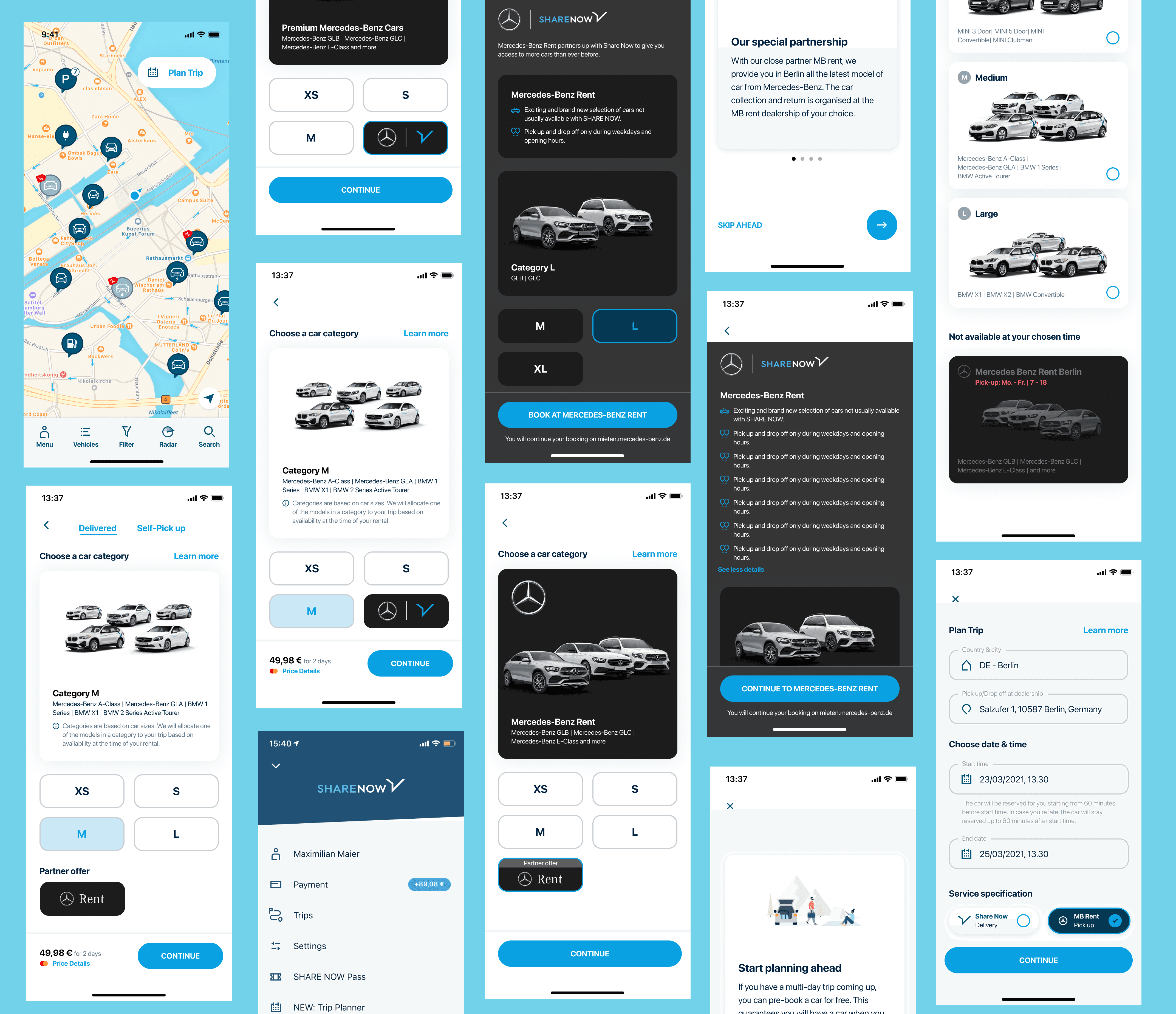
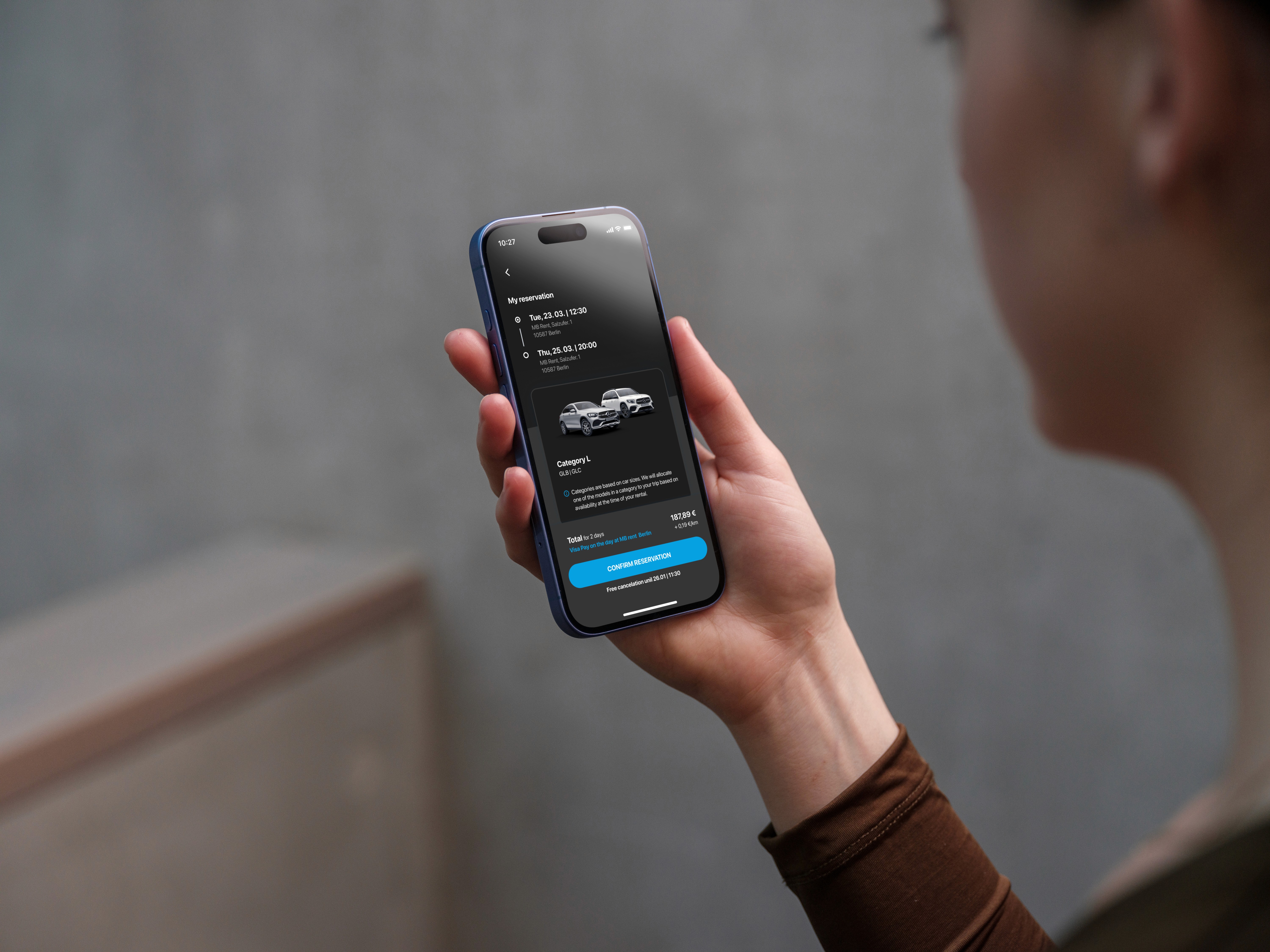
We brought most of the rental booking flow directly into the Share Now app to avoid sending users to an external site. To signal the premium nature of the service without disrupting Share Now’s brand identity, we introduced a subtle dark visual layer inspired by the third-party rental experience. This made the flow feel seamless yet clearly distinguishable — reducing confusion and building trust.

Why am I being sent to another site to finish the booking?

The challenge

Share Now’s on-demand service worked very differently from the partner’s rental model. Their pricing, branding, and interaction patterns didn’t align, making the experience feel disconnected and hard to trust. Users were redirected to an external site to complete the booking, which interrupted the flow, caused confusion, and led to high drop-off rates.

Share Now’s on-demand service worked very differently from the partner’s rental model. Their pricing, branding, and interaction patterns didn’t align, making the experience feel disconnected and hard to trust. Users were redirected to an external site to complete the booking, which interrupted the flow, caused confusion, and led to high drop-off rates.

Target metrics

With no baseline tracking in place, we defined directional metrics to measure engagement and align the team. These targets helped us focus on improving adoption, reducing drop-off, and building a measurable foundation for future testing.
10%

Of users who start the flow complete a booking

10%

Of users who start the flow complete a booking

10%

Of users who start the flow complete a booking

300%

Increase in click through rate (from 5 to 20 users per month)

300%

Increase in click through rate (from 5 to 20 users per month)

300%

Increase in click through rate (from 5 to 20 users per month)

30%

Fewer users dropping off

30%

Fewer users dropping off

30%

Fewer users dropping off

75%

Of users complete onboarding

75%

Of users complete onboarding

75%

Of users complete onboarding

Hypothesis

A seamless booking flow with consistent pricing, constraints, and value communication will build trust and increase adoption of the integrated rental service.

The design

Brand alignment & flow integration

We brought most of the rental booking flow directly into the Share Now app to avoid sending users to an external site. To signal the premium nature of the service without disrupting Share Now’s brand identity, we introduced a subtle dark visual layer inspired by the third-party rental experience. This made the flow feel seamless yet clearly distinguishable — reducing confusion and building trust.

Transparent Onboarding

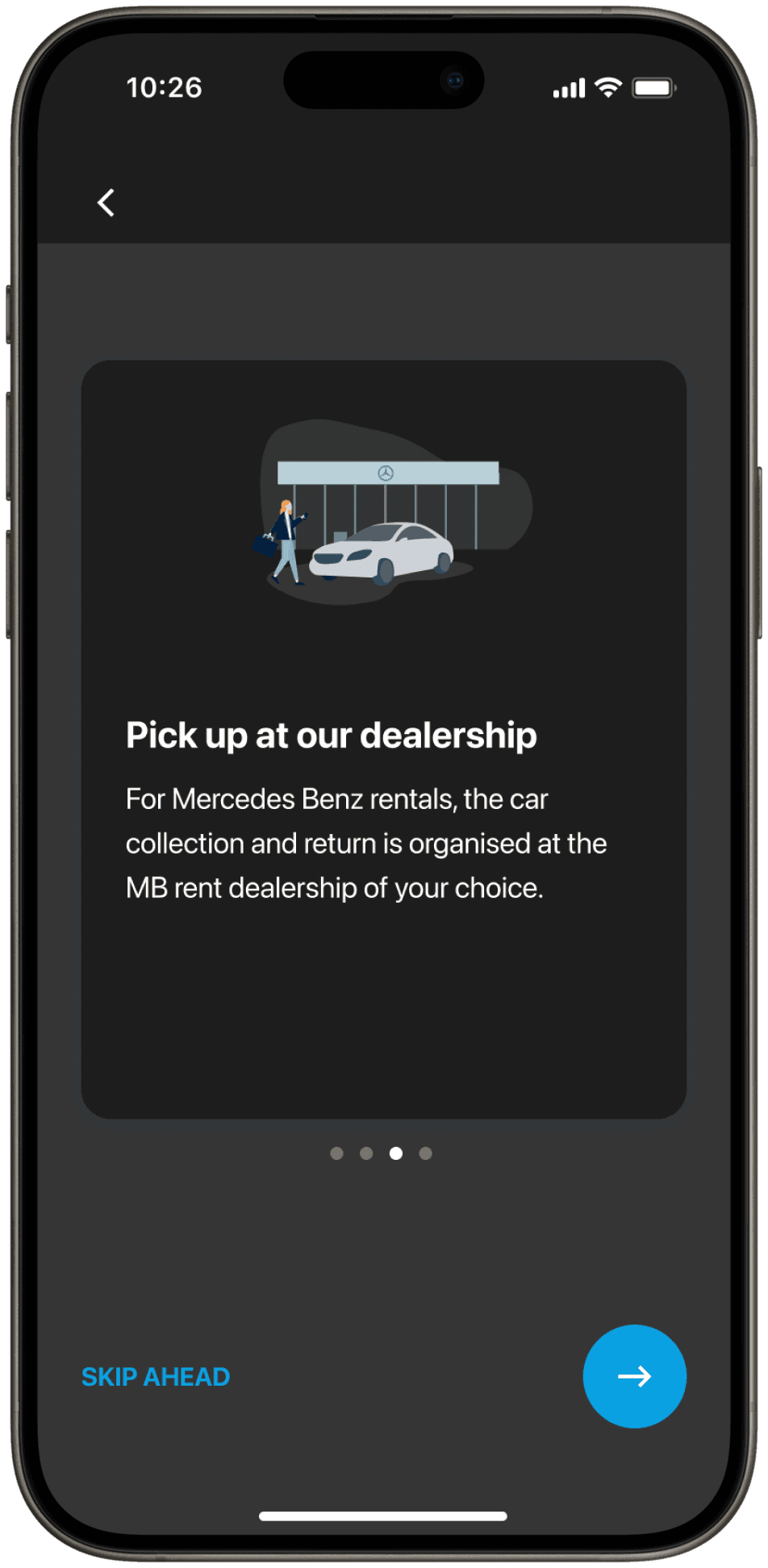
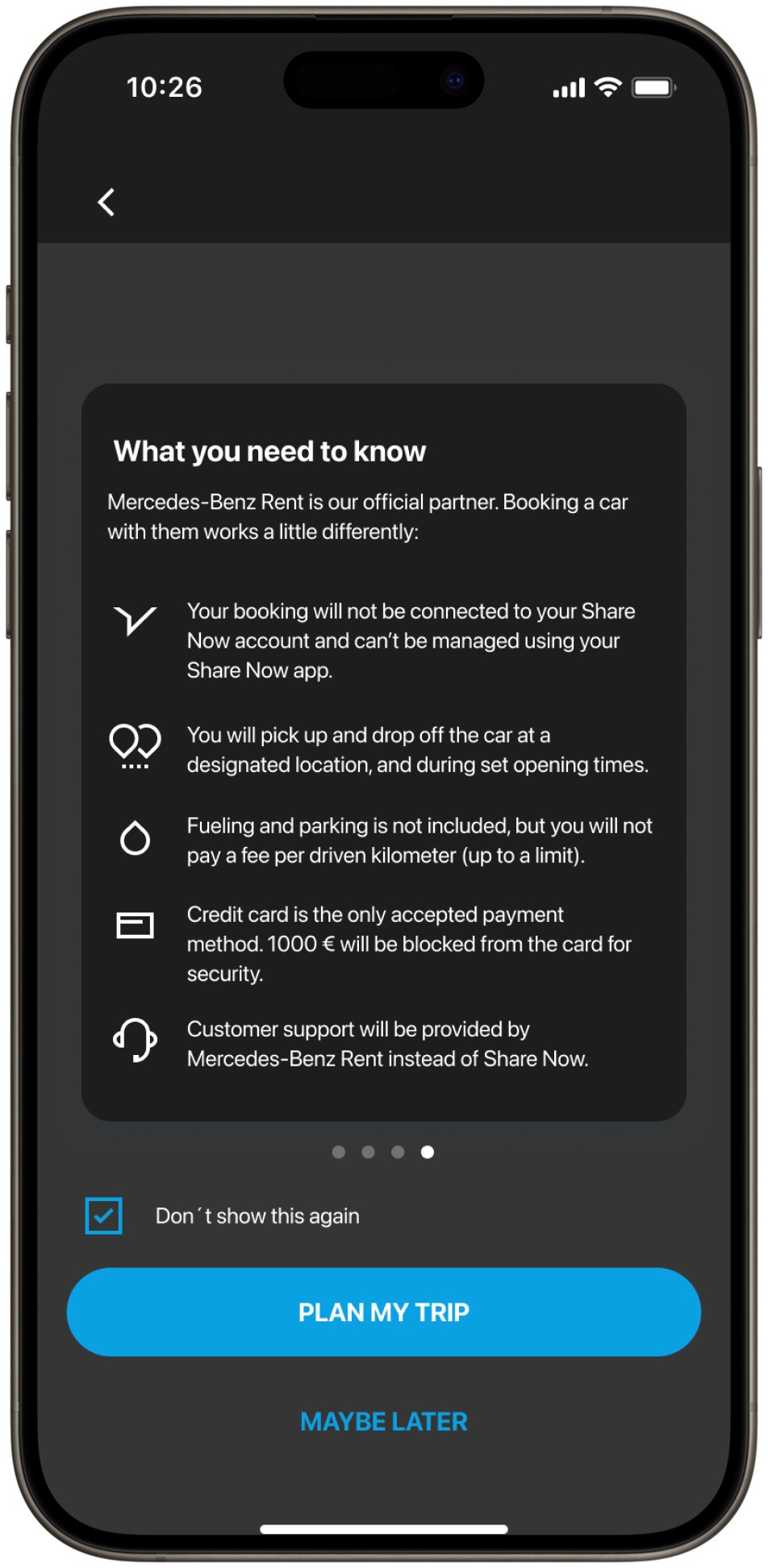
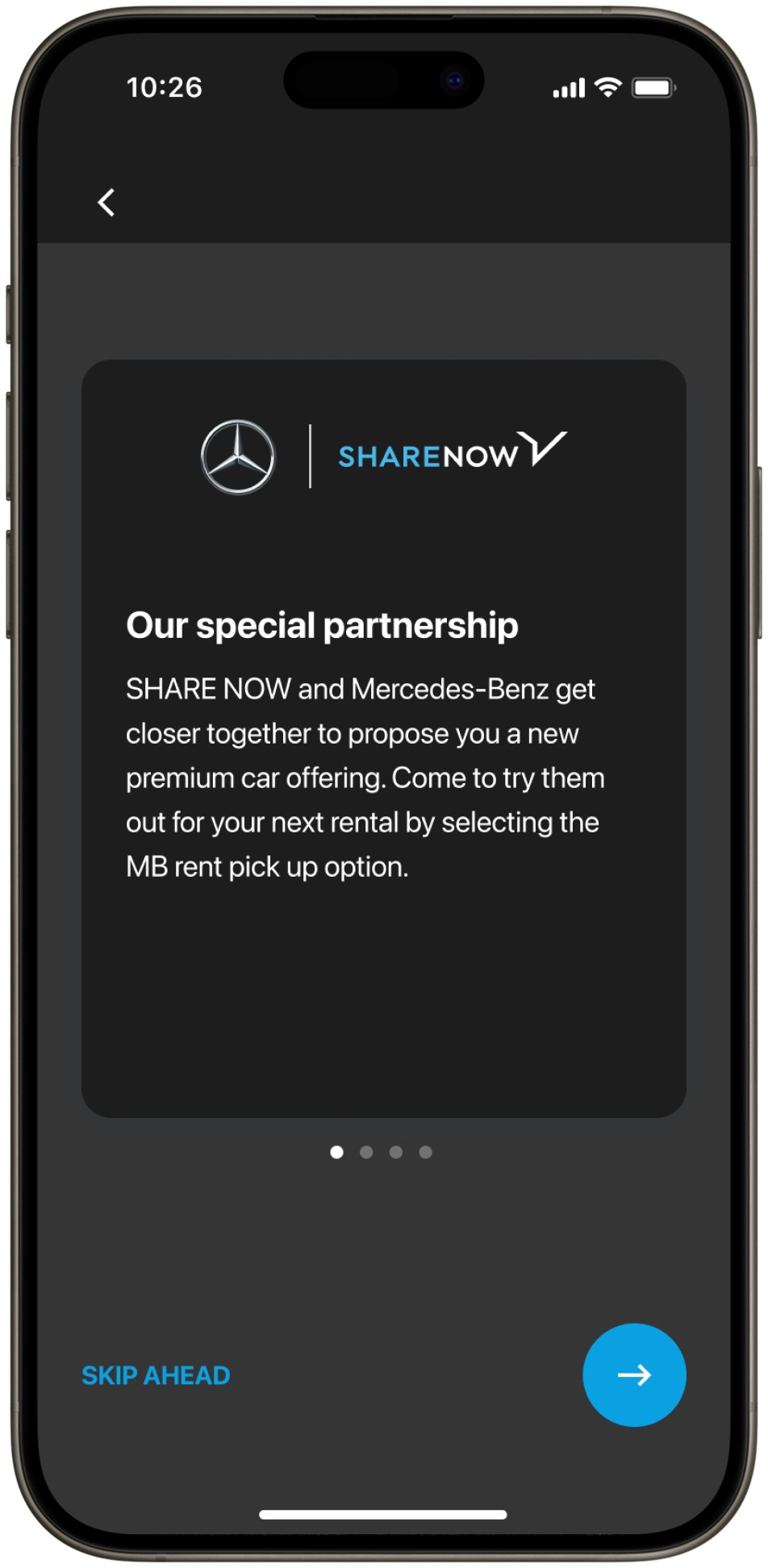
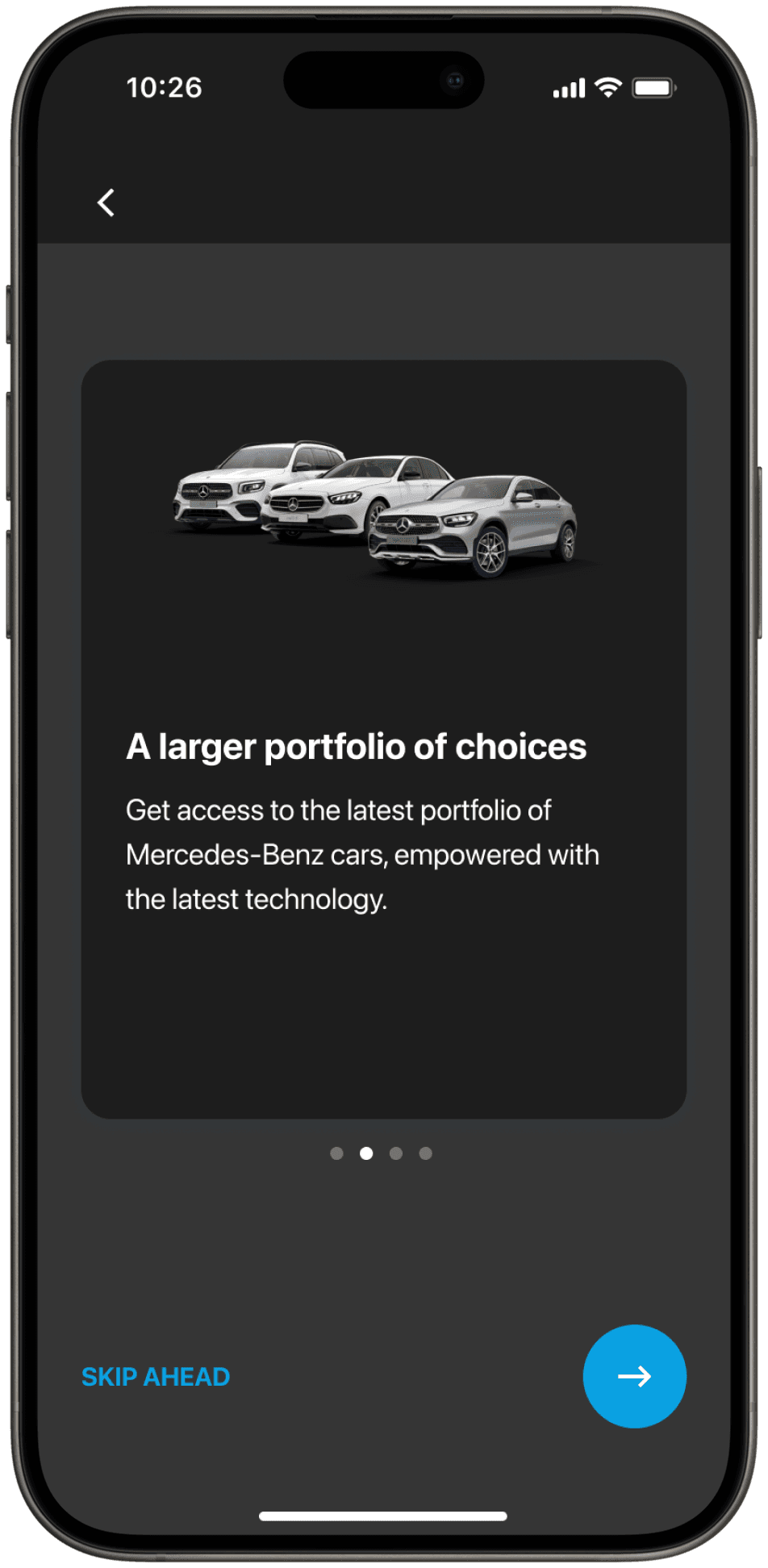
During onboarding, we clearly explained the service’s benefits and requirements — including pick-up conditions, premium positioning, and pricing. This helped set expectations early and reframed the extra steps as intentional rather than inconvenient, increasing user confidence and reducing drop-off.

Streamlining product categories and add-ons

Simplifying Vehicle Categories

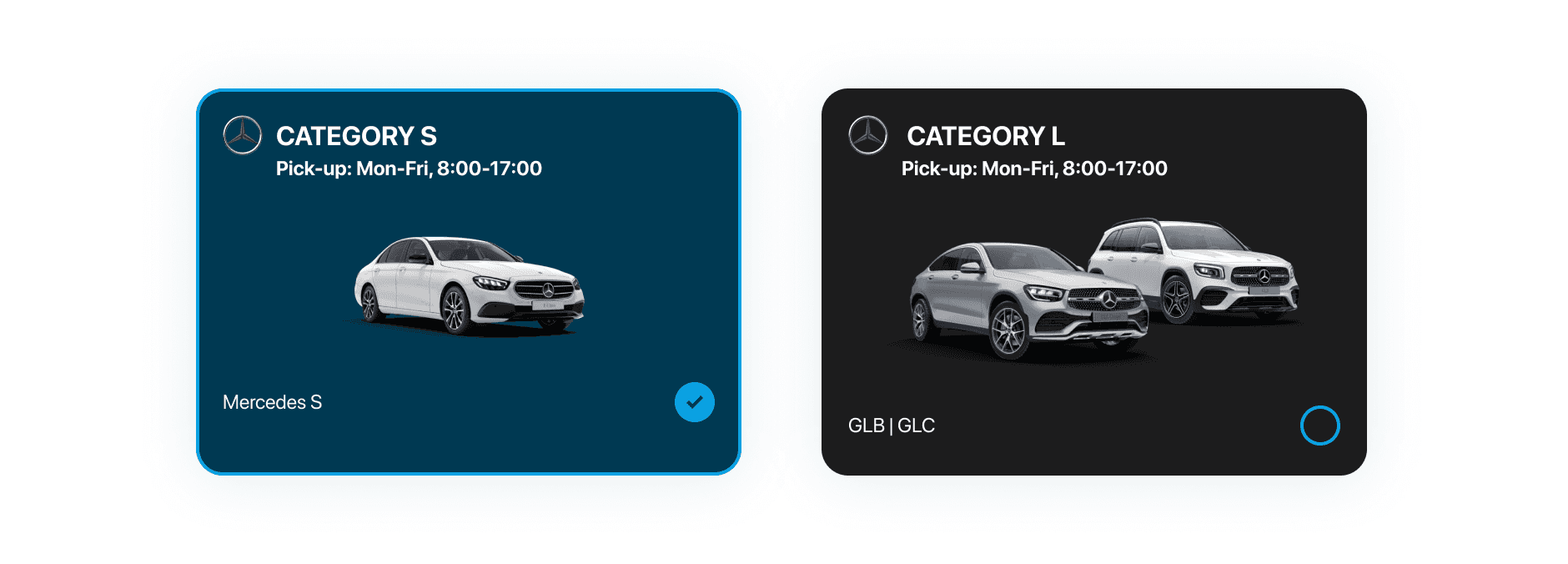
Vehicles were originally organised by model names which made sense internally but wasn’t intuitive for users. We adopted this simpler size-based system so users could pick a car based on space and needs, without needing to know model names.

Streamlining Add-ons & Extras

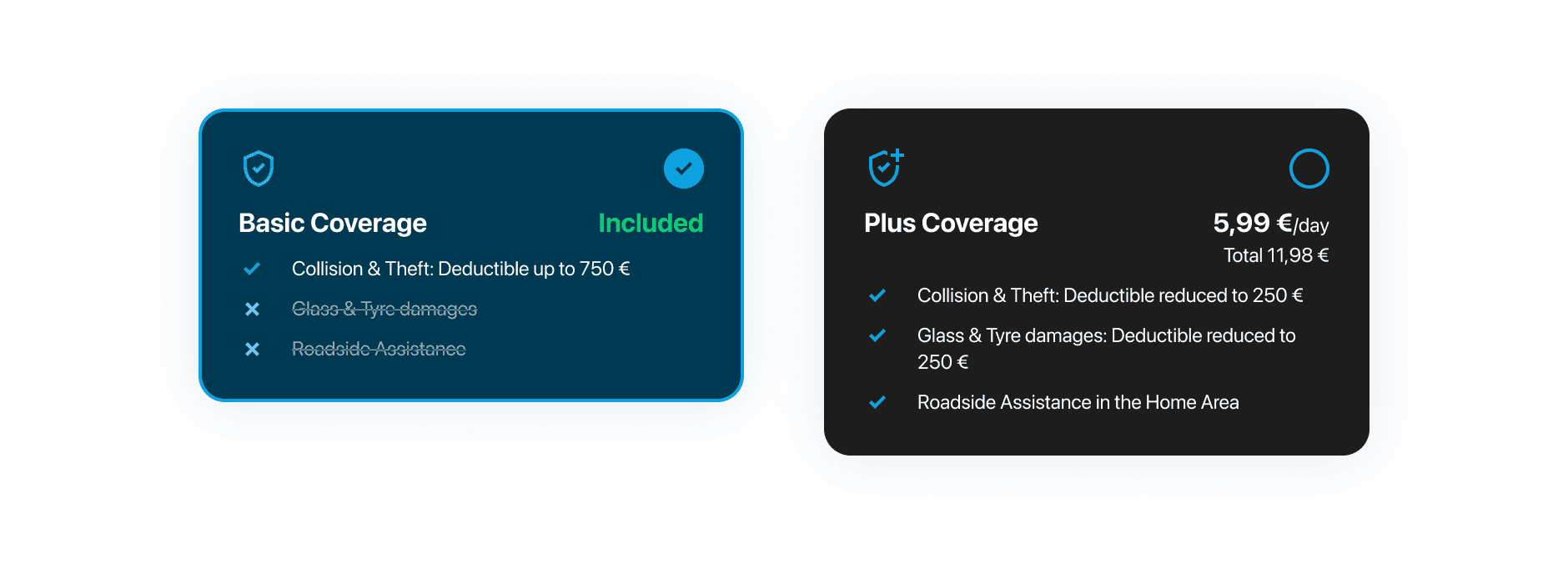
Add-ons were previously split into many confusing options with unclear naming. We simplified the structure by bundling related add-ons, using plain language, and reducing unnecessary choices — making upgrades easier and quicker for users.

A simpler, more intuitive booking flow

We redesigned the booking experience around the core decisions users actually need to make. Instead of navigating technical terms or complex model names, users simply choose a car category based on size — S, M or L — and immediately see what each option offers. Add-ons were also streamlined. We reduced confusing choices and created a clear comparison between what’s already included and the optional Plus Coverage, helping users upgrade confidently when it made sense. The result is a faster, cleaner flow that feels effortless: pick a car, choose your coverage, and confirm your booking.

Measured Outcomes

The pilot showed that premium vehicles alone weren’t enough to convert interest into bookings. This highlighted the need for deeper technical and operational integration — or even reconsidering whether the service model was the right fit. It also exposed a deeper gap in understanding long-term rental users — their expectations, decision-making process, and what it takes to earn their trust and commitment.

100%

Increase in click-through rate

100%

Increase in click-through rate

100%

Increase in click-through rate

90%

Of users completed onboarding

90%

Of users completed onboarding

90%

Of users completed onboarding

0%

Of users completed a booking

0%

Of users completed a booking

0%

Of users completed a booking

100%

Bounce rate after onboarding

100%

Bounce rate after onboarding

100%

Bounce rate after onboarding

Conclusion

Pilots aren’t always meant to succeed — they’re meant to reveal the truth before large investments are made. In this case, the premium value proposition wasn’t strong enough to outweigh the added effort and constraints of the rental model. It became clear that the service itself—not just the interface—would need to be redesigned, which sat outside the scope of our team. Validating personas and assumptions early helped, but only through a live pilot were we able to uncover the real friction points, user behaviour, and operational gaps. Running this experiment helped prevent a costly rollout and built a stronger case for rethinking the service rather than forcing an integration. This project reminded me that design isn’t only about improving flows — it’s about de-risking decisions, protecting product integrity, and knowing when to say this experience isn’t ready yet.